
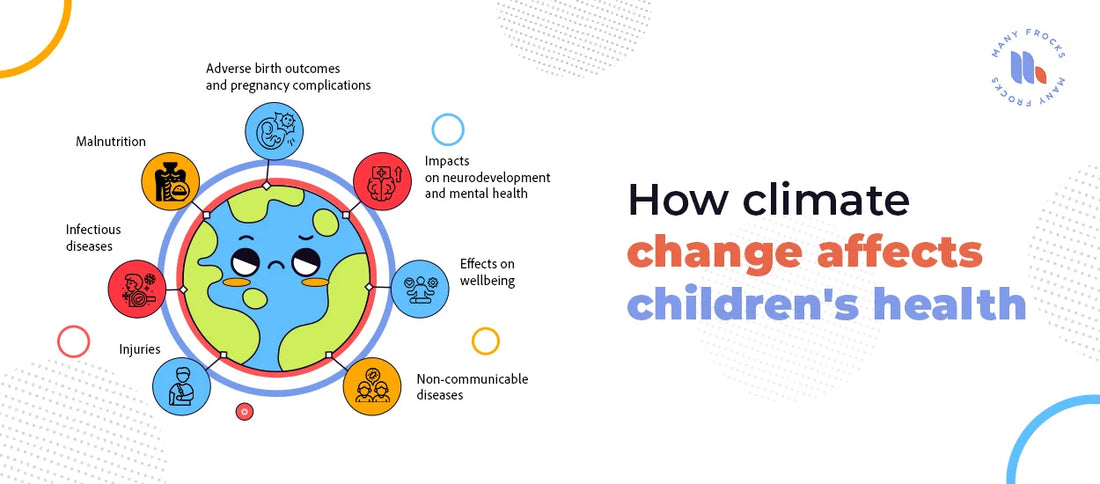
Climate change is no longer a distant future problem, it is a present-day reality that is already affecting millions of lives across the world. While climate change impacts everyone, children are among the most vulnerable. From rising temperatures and polluted air to food insecurity and extreme weather events, climate change poses serious threats to children’s health, education, safety, and overall well-being.
Organizations like UNICEF emphasize that a clean, safe, and sustainable environment is not a luxury, it is a child’s fundamental right. Every child deserves to grow up in a world where they can breathe clean air, drink safe water, live in secure homes, and enjoy a stable climate.
At ManyFrocks, we believe that protecting children’s future goes beyond clothing. It includes supporting environmental awareness, sustainability, and responsible practices that contribute to a healthier planet for the next generation.
This blog explores how climate change affects kids, why it matters, and what families, communities, and brands can do to help protect children’s futures.
Why Children Are More Vulnerable to Climate Change
Children are more vulnerable to climate change than adults for several reasons:
-
Their bodies and immune systems are still developing
-
They breathe more air per kilogram than adults, making them more exposed to pollution
-
They are less able to adapt to extreme heat and weather
- They depend on adults and communities for safety, nutrition, and shelter
Because of these factors, environmental hazards caused by climate change often affect children first and most severely.
Climate Change and Children’s Health
One of the most serious impacts of climate change is on children’s physical health.
1. Air Pollution and Respiratory Problems
Rising pollution levels lead to:
-
Asthma
-
Bronchitis
-
Lung infections
-
Reduced lung development
Children living in polluted cities are at a higher risk of long-term respiratory diseases.
2. Extreme Heat and Heat-Related Illnesses
Increasing global temperatures expose children to:
-
Heat exhaustion
-
Dehydration
-
Heat strokes
-
Reduced ability to play outdoors safely
Young children are less capable of regulating body temperature, making heatwaves particularly dangerous.
3. Waterborne and Foodborne Diseases
Floods, rising temperatures, and water contamination increase the risk of:
-
Diarrheal diseases
-
Cholera
-
Malnutrition
-
Poor hygiene-related illnesses
Access to clean water and safe food becomes harder in climate-affected regions.
Climate Change and Nutrition: Hunger Risks for Children
Climate change disrupts agriculture and food production, leading to:
-
Crop failures
-
Rising food prices
-
Food shortages
-
Increased child hunger
When families struggle to afford nutritious food, children face:
-
Malnutrition
-
Stunted growth
-
Weak immune systems
-
Learning difficulties
UNICEF reports that climate-related food insecurity threatens the health and development of millions of children worldwide.
How Climate Change Affects Children’s Education
Climate disasters such as floods, droughts, cyclones, and heatwaves disrupt schooling by:
-
Destroying school buildings
-
Forcing families to migrate
-
Increasing child labor in affected households
-
Interrupting learning for long periods
When families lose income due to climate impacts, education often becomes a secondary priority, increasing dropout rates especially among vulnerable children.
Climate Change and Children’s Mental Health
Climate change doesn’t just affect children physically it also impacts their mental and emotional well-being.
Children may experience:
-
Anxiety about the future
-
Fear due to natural disasters
-
Stress from displacement or loss of home
- Trauma from extreme weather events
The growing concern about environmental crises has even led to a new term: “eco-anxiety”, which affects many young people globally.
UNICEF’s Stand: Climate Is a Child’s Right
UNICEF strongly advocates that a safe and sustainable environment is part of children’s rights.
According to UNICEF:
-
Children have the right to clean air
-
Children have the right to safe drinking water
-
Children have the right to a stable and healthy climate
-
Governments and businesses must act to protect children from environmental harm
UNICEF highlights that climate change is not just an environmental issue it is a child protection issue.
How Climate Change Increases Inequality Among Children
Climate change affects disadvantaged children the most.
Children in low-income communities face:
-
Poor housing vulnerable to floods and heat
-
Limited access to healthcare
-
Higher exposure to pollution
-
Fewer resources to recover from disasters
This deepens existing inequalities, making climate change a social justice issue as well.
Real-Life Examples of Climate Change Affecting Children
Floods and Displacement
Children lose homes, schools, and stability when floods strike.
Droughts and Water Shortages
Children walk long distances for water, reducing time for education and play.
Air Pollution in Urban Areas
Rising pollution leads to more respiratory illnesses among kids.
Plastic Waste and Environmental Harm
Improper waste disposal pollutes ecosystems, threatening children’s health and safety.
Why Protecting the Environment Protects Children’s Future
Every action taken to fight climate change helps:
-
Improve air and water quality
-
Ensure food security
-
Protect children’s health
-
Secure future education and opportunities
A healthier planet means healthier, happier children.
The Role of Parents in Raising Environmentally Aware Children
Parents can help children understand sustainability by:
-
Teaching eco-friendly habits
-
Reducing plastic use
-
Encouraging recycling
-
Saving energy and water
-
Choosing sustainable products
Small daily habits can shape children into responsible global citizens.
How ManyFrocks Support’s Children’s Future
At ManyFrocks, our commitment goes beyond fashion. We believe in supporting a future where children can thrive in a clean, safe, and sustainable world.
Our sustainability mindset includes:
-
Promoting responsible consumption
-
Reducing waste in packaging and operations
-
Supporting women empowerment and ethical practices
-
Encouraging mindful shopping over fast fashion
-
Raising awareness about environmental responsibility
By creating durable, thoughtfully designed clothing, we help reduce overconsumption and textile waste a small but meaningful step toward environmental sustainability.
Teaching Children That Protecting the Planet Is Empowering
Children today are the environmental leaders of tomorrow. When they learn:
-
Why nature matters
-
How climate change affects their lives
-
How small actions make a big difference
They grow into confident individuals who believe they can shape a better world. Empowering children with knowledge gives them hope instead of fear.
What Governments and Communities Must Do for Children
To protect children from climate change, collective action is essential:
-
Reduce carbon emissions
-
Invest in clean energy
-
Protect green spaces
-
Strengthen disaster preparedness
-
Ensure safe living conditions for vulnerable communities
Climate action is an investment in children’s safety, health, and happiness.
Climate Justice: Protecting Today’s Children and Tomorrow’s Generations
Climate change raises an important question of fairness:
Children contribute least to climate change, yet they suffer the most from its consequences.
Protecting children’s climate rights means ensuring that future generations inherit a planet that is:
-
Livable
-
Safe
-
Clean
-
Full of opportunities
This is not just environmental responsibility, it is moral responsibility.
How Families Can Take Simple Climate-Friendly Steps
Every household can make a difference by:
-
Saving electricity
-
Reducing plastic use
-
Walking or cycling more
-
Supporting sustainable brands
-
Teaching kids to respect nature
Small steps today create a big impact for tomorrow.
How ManyFrocks Reduces Waste Using Pre-Consumer Materials
At ManyFrocks, sustainability is not just a message, it is part of our production process. We actively reduce environmental impact by using pre-consumer waste, deadstock fabrics, and factory offcuts in our manufacturing.
Instead of letting unused fabrics go to landfills, we repurpose high-quality leftover materials from production houses and factories. This helps:
-
Reduce textile waste
-
Prevent unnecessary burning or dumping of fabric
-
Lower demand for newly produced raw materials
-
Minimize carbon footprint
-
Promote responsible and circular fashion
By turning factory offcuts and dead stock into beautiful, wearable designs, ManyFrocks supports both environmental protection and sustainable production ensuring that fewer resources are wasted and more value is created from existing materials.
This approach not only helps the planet but also ensures that children wear clothing made with care, responsibility, and conscious craftsmanship.
Final Thoughts: Protecting the Planet Means Protecting Children
Climate change is not just an environmental crisis, it is a children’s rights crisis. Every child deserves a future where they can grow, learn, play, and dream without being threatened by pollution, extreme weather, or environmental instability.
As UNICEF emphasizes, a safe climate is a child’s right, not a privilege.
At ManyFrocks, we believe that creating a better future for children means supporting sustainability, spreading awareness, and encouraging responsible choices for fashion, for families, and for the planet.
Because when we protect the Earth, we protect our children’s tomorrow.
FAQs
1. How does climate change affect children more than adults?
Children are physically more vulnerable, have developing immune systems, and rely on adults for protection and resources.
2. Why does UNICEF say climate is a child’s right?
Because a safe environment, clean air, and access to water are essential for children’s health, survival, and development.
3. Can climate change affect children’s mental health?
Yes. Climate-related disasters and future uncertainty can cause anxiety, stress, and emotional trauma in children.
4. How does climate change impact children’s education?
Disasters can destroy schools, force displacement, and interrupt learning due to economic hardship.
5. What role do parents play in protecting children from climate change?
Parents can teach sustainable habits, reduce environmental impact, and encourage eco-friendly lifestyles.
6. How can brands like ManyFrocks help children’s future?
By promoting responsible production, reducing waste, supporting ethical practices, and raising environmental awareness.
7. What is the biggest climate threat to children?
Air pollution, extreme heat, food insecurity, water shortages, and natural disasters are among the biggest risks.


