The fashion industry is often associated with creativity, beauty, and self-expression. However, behind every garment lies a story that most consumers never see a story of resources consumed, fabrics discarded, and environmental impact left behind. Every year, millions of meters of perfectly usable fabric end up sitting unused in warehouses or are discarded as waste. At the same time, the fashion industry remains one of the world's largest consumers of water.
What if there was a better way? What if unused fabrics could be transformed into beautiful, luxurious clothing instead of ending up in landfills?
At Many Frocks, this belief forms the foundation of everything we do. Our journey is simple yet powerful: rescue, reimagine, and create. From factory to frock, we give high-quality deadstock fabrics a second life while reducing waste and conserving precious natural resources.
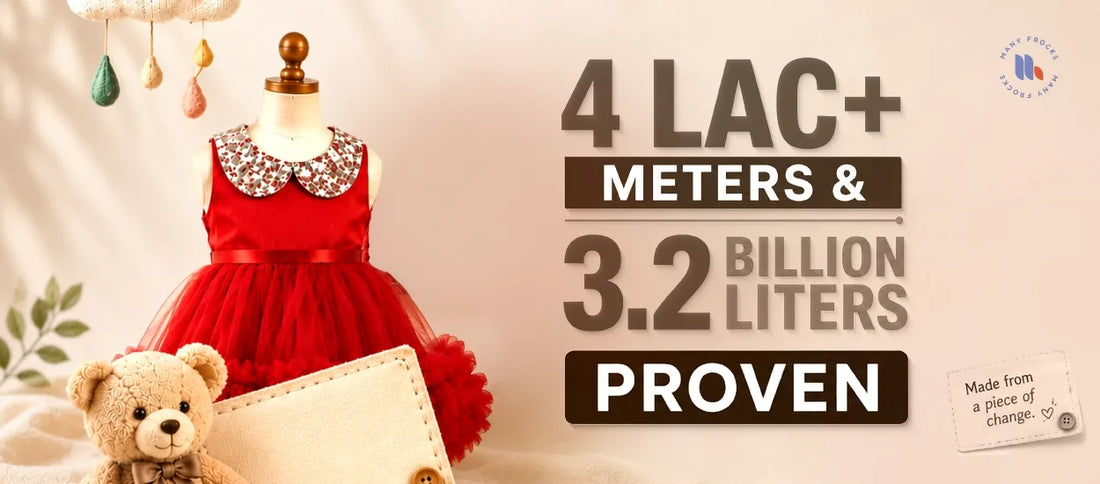
Today, we are proud to share a milestone that reflects the impact of this mission over 4 lakh meters of deadstock fabric rescued and reused, helping save an estimated 3.2 billion liters of water.
This is more than a number. It is proof that fashion can be beautiful, responsible, and transformative at the same time.
Understanding the Problem: Fashion's Hidden Waste Crisis
Most people assume that every fabric produced eventually becomes a garment. Unfortunately, that is far from reality.
Fashion manufacturing often results in excess fabric due to overproduction, cancelled orders, seasonal changes, forecasting errors, and evolving market trends. These unused materials are commonly referred to as deadstock fabrics.
Deadstock fabrics are not defective. In fact, many are premium-quality textiles originally intended for designer collections and high-end production runs. Yet because they are no longer required by manufacturers, they frequently remain unused or are discarded. The result is a massive environmental problem.
When fabric is wasted, all the resources used to create it are wasted as well:
- Water
- Energy
- Raw materials
- Labor
- Transportation resources
Every meter of fabric that goes unused represents a missed opportunity and an unnecessary burden on the environment. This challenge inspired us to rethink the traditional fashion model.
What is Deadstock Fabric?
Deadstock fabric refers to surplus textile material left over from factories, manufacturers, and production units.
These fabrics may exist because:
- Production exceeded demand
- Orders were cancelled
- Fashion trends changed
- Brands modified collections
- Excess inventory accumulated
Despite being unused, these fabrics often maintain exceptional quality standards. Instead of allowing them to become waste, Many Frocks carefully sources and transforms these premium materials into beautiful children's fashion.
The concept is simple:
Use what already exists before creating something new.
By doing so, we reduce the need for additional textile production while giving valuable materials a meaningful purpose.
The Many Frocks Approach: Rescue and Reimagine
At Many Frocks, sustainability is not an afterthought. It is integrated into our design philosophy.
Every rescued fabric tells a story.
Rather than viewing surplus materials as waste, we see them as opportunities for creativity. Our team carefully selects premium deadstock fabrics and transforms them into elegant frocks, dresses, festive wear, and occasion outfits designed especially for children.
The process involves:
1. Responsible Fabric Sourcing
We identify high-quality deadstock fabrics from trusted partners, which goes through a thorough QC (Quality Check) Process.
2. Thoughtful Design
Our designers create collections that maximize fabric utilization while minimizing waste.
3. Skilled Craftsmanship
Each garment is carefully crafted to ensure exceptional quality, comfort, and durability.
4. Sustainable Production
By using existing materials, we significantly reduce the environmental impact associated with producing new textiles.
This approach allows us to create beautiful fashion while contributing to a more circular and responsible industry.
4 Lakh+ Meters of Fabric Rescued
One of the most meaningful achievements in our sustainability journey is the rescue and reuse of over 4 lakh meters of deadstock fabric.
To put this into perspective, 4 lakh meters represents an enormous quantity of textile material that might otherwise have gone unused.
Instead, these fabrics have been transformed into garments loved by families across the country.
Every rescued meter represents:
- Reduced textile waste
- Lower environmental impact
- More efficient resource utilization
- A step toward responsible fashion
This achievement demonstrates what is possible when businesses choose innovation over waste. It proves that sustainability and style can coexist beautifully.
The Water Connection: Why Every Meter Matters
When people think about fashion, water conservation is rarely the first thing that comes to mind.
However, textile production is incredibly water-intensive. Water is required throughout the manufacturing process, including:
- Fiber cultivation
- Fabric processing
- Dyeing
- Finishing
- Washing
- Production operations
The creation of new textiles demands enormous quantities of freshwater resources.
When deadstock fabrics are reused, the need to produce additional fabric decreases. As a result, significant amounts of water can be conserved.
This is where the true environmental impact becomes visible. By rescuing and utilizing over 4 lakh meters of deadstock fabric, Many Frocks has contributed to an estimated saving of 3.2 billion liters of water.
That number is difficult to imagine. Yet it highlights the extraordinary difference sustainable practices can make.
3.2 Billion Liters of Water Saved
Water is one of Earth's most valuable resources. Communities, agriculture, ecosystems, and future generations all depend on it.
Saving 3.2 billion liters of water represents far more than an environmental statistic. It represents conscious decision-making at every stage of the fashion journey.
Every garment created from rescued fabric helps reduce demand for newly manufactured textiles. Every dress purchased supports a system that prioritizes resource conservation.
Every family choosing sustainable fashion contributes to a larger movement toward responsible consumption.Together, these small decisions create measurable impact.
The estimated 3.2 billion liters of water saved reflects what can happen when sustainability becomes part of everyday business practices.
Why Sustainable Kids Fashion Matters
Children represent the future. The choices we make today shape the world they will inherit tomorrow.
As awareness around sustainability continues to grow, parents are increasingly looking for products that align with their values. Sustainable kids fashion offers several benefits:
Reduced Environmental Impact
Using existing materials reduces waste and conserves resources.
High-Quality Garments
Deadstock fabrics are often premium materials originally intended for high-end production.
Responsible Consumption
Parents can make conscious purchasing decisions without compromising on style.
Supporting Circular Fashion
Sustainable fashion encourages resource efficiency and waste reduction.
At Many Frocks, we believe children deserve clothing that is not only beautiful but also created with care for the planet.
Redefining Luxury Through Sustainability
Luxury has traditionally been associated with exclusivity, premium materials, and exceptional craftsmanship. Today, a new definition of luxury is emerging.
Modern consumers increasingly recognize that true luxury includes responsibility.
A beautiful garment becomes even more meaningful when it is created with environmental consciousness. This philosophy is reflected in our concept of "Rescripted Luxury."
Instead of relying solely on newly manufactured materials, we embrace the beauty of transformation. We take fabrics that might otherwise be overlooked and turn them into cherished pieces designed to create lasting memories.
The result is fashion that feels luxurious not only because of how it looks, but because of the positive impact it creates.
Building a More Circular Fashion Future
The traditional fashion model follows a linear path:
Produce → Use → Discard
This system generates significant waste and places increasing pressure on natural resources.A more sustainable alternative is circular fashion.
Circular fashion focuses on:
- Extending material life cycles
- Reducing waste
- Maximizing resource efficiency
- Reusing existing materials
- Creating long-term environmental value
By incorporating deadstock fabrics into our collections, Many Frocks actively supports this circular approach.
Rather than allowing valuable resources to remain unused, we help keep them in circulation. Every rescued fabric contributes to a more sustainable future for fashion.
Small Choices, Big Impact
Environmental change does not happen through one large action alone. It happens through millions of small choices made consistently over time.
Choosing sustainable fashion may seem like a small decision, but collectively these choices create meaningful impact. When consumers support responsible brands, they encourage the industry to adopt better practices. When businesses prioritize sustainability, resource conservation becomes part of everyday operations. When families choose thoughtfully made garments, they help reduce waste and protect natural resources.
Together, these actions create lasting change.
The Journey Ahead
Rescuing over 4 lakh meters of fabric and helping save an estimated 3.2 billion liters of water is an important milestone, but it is only the beginning.
At Many Frocks, our commitment remains clear:
- Rescue more fabric
- Reduce more waste
- Save more resources
- Create beautiful clothing responsibly
Every collection we design represents another opportunity to transform surplus materials into something meaningful. Every garment tells a story of innovation, creativity, and conscious craftsmanship. Every purchase supports a vision where fashion contributes positively to both people and the planet.
Conclusion
Fashion has the power to inspire, express individuality, and create unforgettable memories. It also has the power to drive positive environmental change.
By rescuing and reimagining over 4 lakh meters of deadstock fabric, Many Frocks has helped save an estimated 3.2 billion liters of water, proving that sustainability and style can go hand in hand.
Our journey from factory to frock is about more than creating beautiful clothing. It is about challenging conventional thinking, reducing waste, conserving resources, and building a better future for the next generation.
- Because every rescued meter matters.
- Every drop of water matters.
- And every sustainable choice brings us one step closer to a more responsible and beautiful world.
FAQs
1. What is deadstock fabric?
Deadstock fabric refers to surplus, unused, or leftover fabric from textile mills and factories that would otherwise go to waste. Many Frocks rescues these fabrics and transforms them into stylish children's clothing.
2. How does using deadstock fabric help the environment?
Using deadstock fabric reduces textile waste, minimizes the demand for new fabric production, and helps conserve valuable resources such as water, energy, and raw materials.
3. How much water can be saved through deadstock fabric usage?
By rescuing and repurposing over 4 lakh meters of deadstock fabric, Many Frocks has helped save an estimated 3.2 billion liters of water that would have been used in producing new textiles.
4. Are clothes made from deadstock fabric high quality?
Yes. Deadstock fabrics are often sourced from premium manufacturers and maintain the same quality standards as newly produced fabrics, while offering a more sustainable choice.
5. Why is sustainable fashion important for future generations?
Sustainable fashion helps reduce environmental impact, conserve natural resources, and create a cleaner, healthier planet for future generations to enjoy.
6. How does Many Frocks contribute to sustainable fashion?
Many Frocks gives unused fabrics a second life by converting them into thoughtfully designed children's clothing, reducing waste and promoting responsible fashion practices.
7. Can small fashion choices really make a difference?
Absolutely. Every sustainable purchase supports waste reduction, resource conservation, and more responsible production practices. Small choices made consistently can create a significant positive impact over time.


