
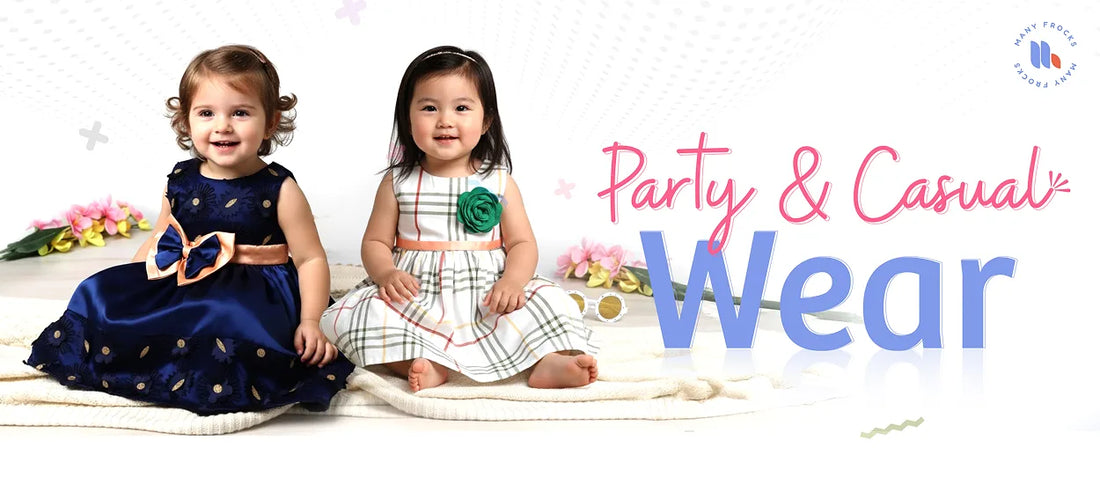
When it comes to dressing young girls, parents often find themselves choosing between casual dresses and party dresses. While both are essential parts of a child’s wardrobe, they serve very different purposes. Understanding the difference between casual dresses for girls and party dresses helps parents make smarter, more practical fashion choices for everyday comfort as well as special occasions.
At ManyFrocks, we believe that the right outfit should suit the occasion while keeping the child happy, comfortable, and confident. This blog explains how casual dresses differ from party dresses in terms of fabric, design, comfort, styling, and usage, helping parents build a balanced wardrobe for their girls.
Understanding the Purpose Behind Casual and Party Dresses
The main difference between casual and party dresses lies in why they are worn. Casual dresses are meant for daily activities, while party dresses are designed for celebrations and special moments.
Casual dresses for girls are created for everyday wear. These dresses are worn for long hours during school days, playtime, family outings, travel, or at home. Since children are active and constantly on the move, casual dresses are designed to be simple and easy to wear. They focus more on practicality than appearance.
Party dresses, on the other hand, are designed for occasions that are special and memorable. These include birthdays, weddings, festivals, school functions, and family celebrations. Party dresses are worn for shorter durations and are meant to look elegant, festive, and eye-catching.
Fabric Choices: Comfort Comes First vs Visual Appeal
One of the biggest differences between casual and party dresses for girls is the type of fabric used.
Casual dresses are usually made from soft fabrics. Cotton and cotton-blend materials are the most commonly used because they are gentle on a child’s skin and suitable for long wear. These fabrics allow airflow, absorb sweat, and prevent skin irritation, especially during warm weather. Because casual dresses are worn frequently, the fabric also needs to be durable and easy to wash.
Party dresses use richer and more decorative fabrics to enhance the overall look of the outfit. Materials like net, tulle, satin, silk blends, organza, and velvet are commonly used in party wear. These fabrics add volume, shine, and structure, making the dress look grand and festive. While these fabrics look beautiful, they are usually heavier and less which is why party dresses are best worn for limited hours.
Design and Detailing: Simplicity vs Decoration
Design plays a major role in distinguishing casual dresses from party dresses.
Casual dresses are designed to be simple and functional. The cuts are relaxed, and the patterns are easy on the eyes. These dresses often feature basic prints, stripes, florals, or playful designs suitable for daily wear. The stitching is comfortable, and the dresses are easy for children to put on and remove without assistance.
Party dresses focus more on decorative details that make the outfit stand out. These dresses often include embroidery, lacework, sequins, ruffles, bows, frills, layered skirts, and stylish sleeves. Such detailing adds elegance and makes the dress suitable for celebrations. However, these decorative elements also mean that party dresses are not meant for rough or active play.
Comfort and Movement: Everyday Ease vs Occasion Wear
Comfort is a key factor when choosing dresses for girls, and this is where casual dresses clearly differ from party dresses.
Casual dresses are designed to support free movement. They are lightweight and loose-fitting, allowing girls to run, jump, sit, and play comfortably. Elastic waistbands, soft seams, and stretchable fabrics ensure that the dress does not feel restrictive even after wearing it for several hours.
Party dresses, while becoming more child-friendly over time, may still feel slightly heavy due to layers and embellishments. They are designed to be worn during specific events and may not be suitable for prolonged physical activity. While modern party dresses aim to balance style and comfort, they are still best reserved for special occasions rather than daily wear.
Maintenance and Care: Easy Wash vs Special Handling
Another important difference lies in how these dresses are maintained.
Casual dresses are extremely easy to care for. Most can be machine-washed at home and do not require special handling. They are designed to withstand frequent washing and regular use without losing shape or colour. This makes them ideal for busy parents who need practical clothing options for their children.
Party dresses usually require more careful maintenance. Due to delicate fabrics and decorative elements, they may need hand washing or dry cleaning. Improper washing can damage embroidery, sequins, or net layers. These dresses also need careful storage to maintain their appearance for future use.
Styling Requirements: Minimal vs Complete Look
Casual dresses are designed to look complete on their own. They do not require heavy styling or accessories. Simple footwear, a hair clip, or a light jacket is usually enough to complete the look. This makes casual dresses convenient for daily use.
Party dresses often need additional styling to enhance their festive appeal. They are usually paired with party shoes, hair accessories, light jewellery, and styled hairstyles. These elements together create a polished and celebration-ready appearance suitable for special occasions.
Colour and Pattern Choices
Colour selection also differs between casual and party dresses.
Casual dresses usually come in soft shades, everyday colours, and playful prints. These colours are practical and suitable for regular wear, as they do not show stains easily and remain versatile.
Party dresses often feature bright colours, rich tones, festive shades, and elegant combinations. These colours are chosen to make the outfit stand out during celebrations and create a memorable look.
Occasion Suitability
Casual dresses are ideal for everyday situations such as school, playdates, shopping trips, travel, and home wear. They are meant to be worn often and provide maximum comfort.
Party dresses are reserved for special occasions like birthdays, weddings, festivals, school functions, and family gatherings. They add charm and elegance to important moments and celebrations.
How ManyFrocks Supports Every Occasion
At ManyFrocks, we understand that girls need different outfits for different moments in life. Our collections are thoughtfully designed to include comfortable casual dresses for everyday wear and stylish party dresses for special occasions. Each dress is made keeping children’s comfort, quality fabrics, and age-appropriate designs in mind.
FAQs
1. Can party dresses be worn daily?
Party dresses are not recommended for daily wear as they are designed for special occasions and may not provide the comfort needed for long hours.
2. Are casual dresses suitable for birthday parties?
Simple casual dresses can be worn for small or informal gatherings, but party dresses are better suited for celebrations.
3. Which fabric is best for everyday dresses for girls?
Cotton and cotton-blend fabrics are best for everyday wear as they are cotton lining and gentle on the skin.
4. Why are party dresses more expensive than casual dresses?
Party dresses often use richer fabrics and decorative elements, which increases their cost.
5. How many party dresses should a girl have?
A few well-chosen party dresses are enough for special occasions, while casual dresses should form the majority of the wardrobe.


